
Step 6 – Drug Manufacturing
 Manufacturing: the often-overlooked bottleneck
When discussing radiopharmaceutical supply chains, supply concerns are often reduced to radionuclide availability. While securing isotope production remains essential, manufacturing capabilities have become an equally critical factor in ensuring patient access.
The radiolabeling step, where radionuclides are combined with their targeting vector under strict GMP conditions, is one of the most complex stages of the value chain. Any capacity constraint, quality issue, or regulatory delay can rapidly disrupt supply and limit patient access.
The commercialization of therapies such as Pluvicto® has highlighted an important reality: success in radiopharmaceuticals depends not only on securing radionuclides, but also on building manufacturing networks capable of supporting demand while maintaining the highest quality standards.
More broadly, manufacturing readiness is becoming a strategic topic much earlier in the development process. Building dedicated radiopharmaceutical production capacity requires significant investment, specialized infrastructure, regulatory approvals, and highly qualified personnel, often years before commercial success is guaranteed.
 The Challenge Ahead
For companies developing the next generation of radiopharmaceuticals, the challenge is not simply how to manufacture, but when to commit to manufacturing investments.
Building internal production capabilities provides greater control over quality, capacity, and supply security, but requires substantial capital investment long before marketing authorization is obtained.
This explains why many developers initially turn to specialized CDMOs and CMOs, allowing them to limit industrial risk while advancing clinical development. Yet this model raises another question: as more radiopharmaceuticals reach commercialization, will available manufacturing capacity remain sufficient to support future demand?
The industry already offers different strategic approaches:
 Novartis has chosen a highly integrated model for therapies such as Lutathera® and Pluvicto®, investing extensively in its own manufacturing network.
Bayer , with Xofigo®, has historically relied more heavily on external manufacturing partners rather than building a fully integrated production footprint.
Lantheus‘ acquisition of Evergreen Theragnostics illustrates another emerging trend: securing long-term manufacturing capabilities through vertical integration and acquisitions.
At the same time, healthcare systems must also be prepared to absorb growing volumes of radioligand therapies through adequate nuclear medicine infrastructure, radiopharmacy capabilities, and trained personnel.
 The Big Question
As radiopharmaceutical pipelines continue to expand, what will be the winning manufacturing strategy?
Will emerging developers continue to rely on CDMOs and CMOs to minimize industrial risk until approval, or will we see increasing vertical integration as products move closer to commercialization?
And in a market where manufacturing capacity remains limited, could access to production infrastructure become a competitive advantage as important as the molecule itself?
We’d love to hear your thoughts in the comments. 
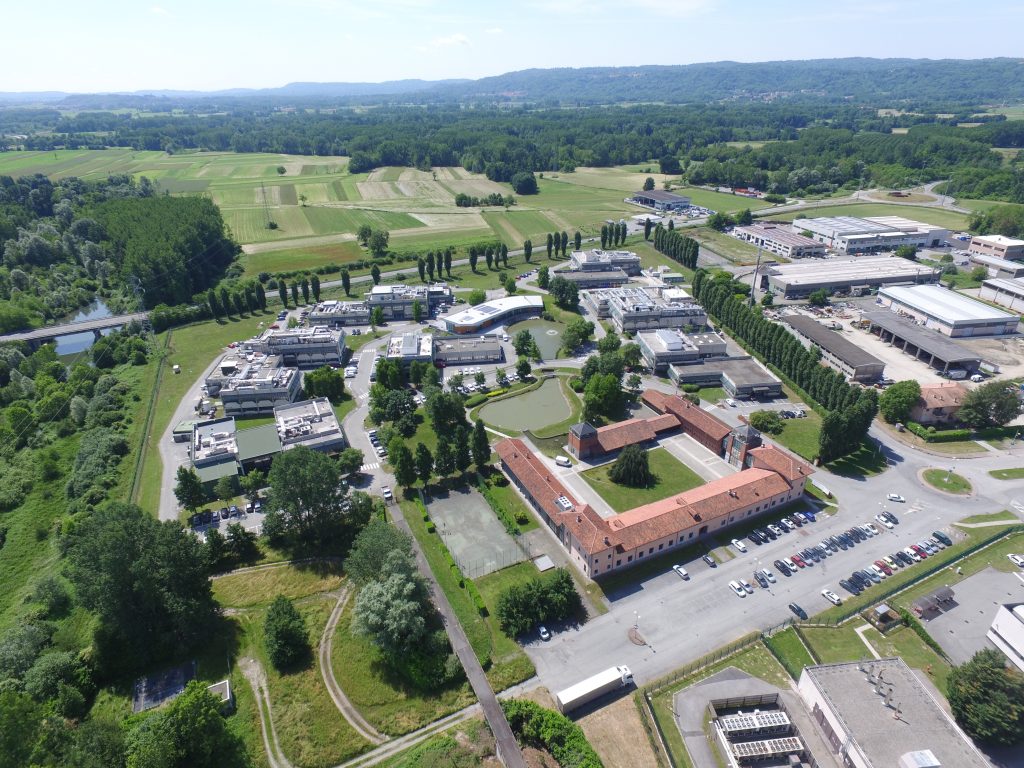
Image source: Il Sole 24 Ore, “Novartis invests in Ivrea with a new radiopharmaceuticals plant” https://en.ilsole24ore.com/art/novartis-invests-ivrea-new-radiopharmaceuticals-plant-AGyXQJW
#MEDraysintell #Radiopharmaceuticals #DrugManufacturing #Radiolabeling #NuclearMedicine #CDMO