Radiopharmaceutical supply chain structure: 5/7
Step 5 – Radionuclide Processing
🌐 The processing integration : moving from standalone assets to coupled supply chains
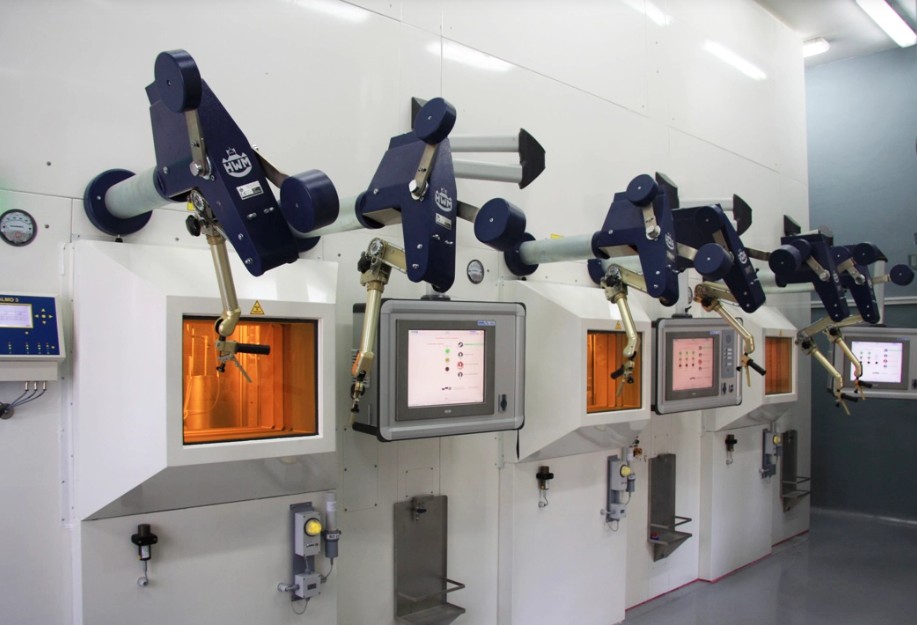
Radionuclide processing plays a central role in the radiopharmaceutical supply chain, transforming raw irradiation output (irradiated targets) into marketable radionuclide products (radiochemicals).
Unlike the historically “open” 99Mo supply chain, where multiple reactors supplied raw targets across countries, the physical constraints of short half-lives imposed the fully integrated approach seen in 18F-FDG centers, where combining irradiation, processing, and radiolabeling onsite yields a far higher return on investment. With that in mind, industrial players quickly realized that vertical integration is a highly profitable path for any radionuclide, regardless of its half-life.
Consequently, in today’s market, processing capabilities are no longer an independent part of the equation. No matter how advanced a processing facility may be, it remains entirely dependent on reliable access to upstream irradiation capacity.
Driven by the massive investments in therapeutic radionuclides to support radioligand therapy (RLT), the industry is becoming increasingly interconnected. Irradiation and processing assets are rapidly evolving into tightly coupled supply chains, whether for 177Lu or 225Ac.
Yesterday’s market was led by those with processing power; tomorrow’s could be dominated by the integrated players who control both irradiation and processing. Because radiochemical production captures far more value than standalone irradiation services, the pull now runs in both directions : processors are reaching upstream to secure neutrons, while irradiation providers are reaching downstream to captures margin.
Several distinct models are emerging:
- Downstream pull (securing irradiation capabilities): processors are locking in irradiation capacity by co-investing in infrastructures (most notably illustrated by ITM’s strategic partnership with Bruce Power in Canada).
- Co-located ecosystems (the hub model): next-generation research reactor projects are no longer just offering “neutrons”; they are anchoring dedicated medical campuses designed to host downstream capabilities. A prime example is the Petten site in the Netherlands, which will co-locate the PALLAS research reactor, both Curium’s and NRG PALLAS processing capabilities, and the FIELD-LAB collaborative platform.
- Full vertical integration: When possible, new players are increasingly seeking to acquire or build both isotope production and GMP processing capabilities under a single corporate umbrella to eliminate third-party dependency entirely (f.i. OranoMed with Pb-212).
As more radionuclides move toward commercial-scale production, competitive advantage will increasingly depend on securing access to isotopes and building resilient partnerships across the value chain.
At MEDraysintell, we help stakeholders understand these interactions, identify strategic dependencies, and anticipate future bottlenecks across global supply chains.
One critical question remains: exclusive partnerships lock up capacity. They stop competitors from sharing irradiation capabilities, which are needed to overcome outages or unexpected shutdowns.
By building silos instead of collaborative networks, is the industry inadvertently making isotope production an even tighter bottleneck?
Feel free to share your thoughts in the comments! 👇
#MEDraysintell #Radionuclides #Processing #NuclearMedicine #SupplyChain #Lu177 #Ac225